

Western businesses lose millions each year by underestimating Japan's unique market dynamics. Cultural missteps, poor localization, and communication failures derail even well-funded ventures. Success in Japan demands more than capital and ambition. You need deep cultural awareness, patience, and strategic adaptation. This guide equips you with proven insights on navigating Japanese business culture, adapting products, building trust, and avoiding costly errors. You'll discover practical frameworks and expert strategies to enter the Japanese market confidently in 2026.
Table of Contents
- Understanding The Business Landscape And Cultural Nuances In Japan
- Preparing Your Product And Customer Engagement For The Japanese Market
- Effective Communication And Trust-Building Strategies For Japan
- Common Pitfalls And How To Avoid Them When Doing Business In Japan
- Partner With Experts To Succeed In The Japanese Market
Key takeaways
| Point | Details |
|---|---|
| Cultural understanding drives success | Japanese business emphasizes hierarchy, consensus, and long-term relationships over quick wins. |
| Product localization is non-negotiable | Japanese consumers prefer ready-to-use, compact solutions tailored to their living spaces and lifestyles. |
| Language capability determines credibility | Professional translation and bilingual staff prevent miscommunication and build trust. |
| Trust-building requires time and respect | Patience, consistent engagement, and following nemawashi processes establish lasting partnerships. |
| Avoiding common pitfalls saves resources | Rushing market entry, ignoring etiquette, and poor research lead to expensive failures. |
Understanding the business landscape and cultural nuances in Japan
Japan operates on fundamentally different business principles than Western markets. Japanese business culture is conservative with slow decision-making processes that prioritize group consensus over individual authority. You'll encounter nemawashi, the practice of informal consensus-building before formal meetings. This isn't bureaucracy. It's how Japanese organizations maintain harmony and ensure all stakeholders align before commitments.
Hierarchy shapes every interaction. Junior staff defer to senior leaders, and age often correlates with authority. Decisions flow upward through multiple management layers, requiring patience from Western executives accustomed to rapid approvals. The concept of wa, or harmony, governs workplace dynamics. Confrontation and direct disagreement are avoided to preserve relationships and group cohesion.
Language barriers compound these cultural complexities. English fluency remains limited among many Japanese professionals, especially outside Tokyo. Misunderstandings escalate quickly when nuance gets lost in translation. You can't assume your counterparts grasp subtle Western communication styles or humor. What reads as friendly directness in New York may come across as rude aggression in Osaka.
Ignoring these realities damages relationships and credibility. Western businesses that push for quick decisions or challenge senior leaders publicly find themselves shut out of opportunities. Understanding Japanese business practices before engaging prevents these missteps. Your initial interactions set the tone for years of potential partnership.
Key cultural elements to master:
- Respect for hierarchy and seniority in all communications and meetings
- Patience with consensus-driven decision timelines that may span months
- Attention to Japanese business etiquette including bowing, business card exchange, and meeting protocols
- Awareness of indirect communication styles that avoid explicit refusals
- Recognition that relationships precede transactions in Japanese business culture
Pro Tip: Schedule multiple relationship-building meetings before discussing business terms. Japanese partners evaluate trustworthiness and compatibility before committing to deals.
Preparing your product and customer engagement for the Japanese market
Product adaptation determines market acceptance in Japan. Japanese consumers hold exacting standards for quality, functionality, and service. IKEA's standard furniture and DIY model initially failed because Japanese buyers preferred ready-to-use products over self-assembly kits. Apartment sizes average 60-70 square meters, demanding compact, space-efficient designs that Western furniture catalogs don't prioritize.
IKEA's turnaround illustrates successful localization. The company redesigned product ranges for smaller living spaces, offered assembly services, and enhanced customer support. Sales recovered as the brand aligned with local preferences rather than forcing Western retail models onto Japanese consumers. Your product strategy must follow similar adaptation principles.
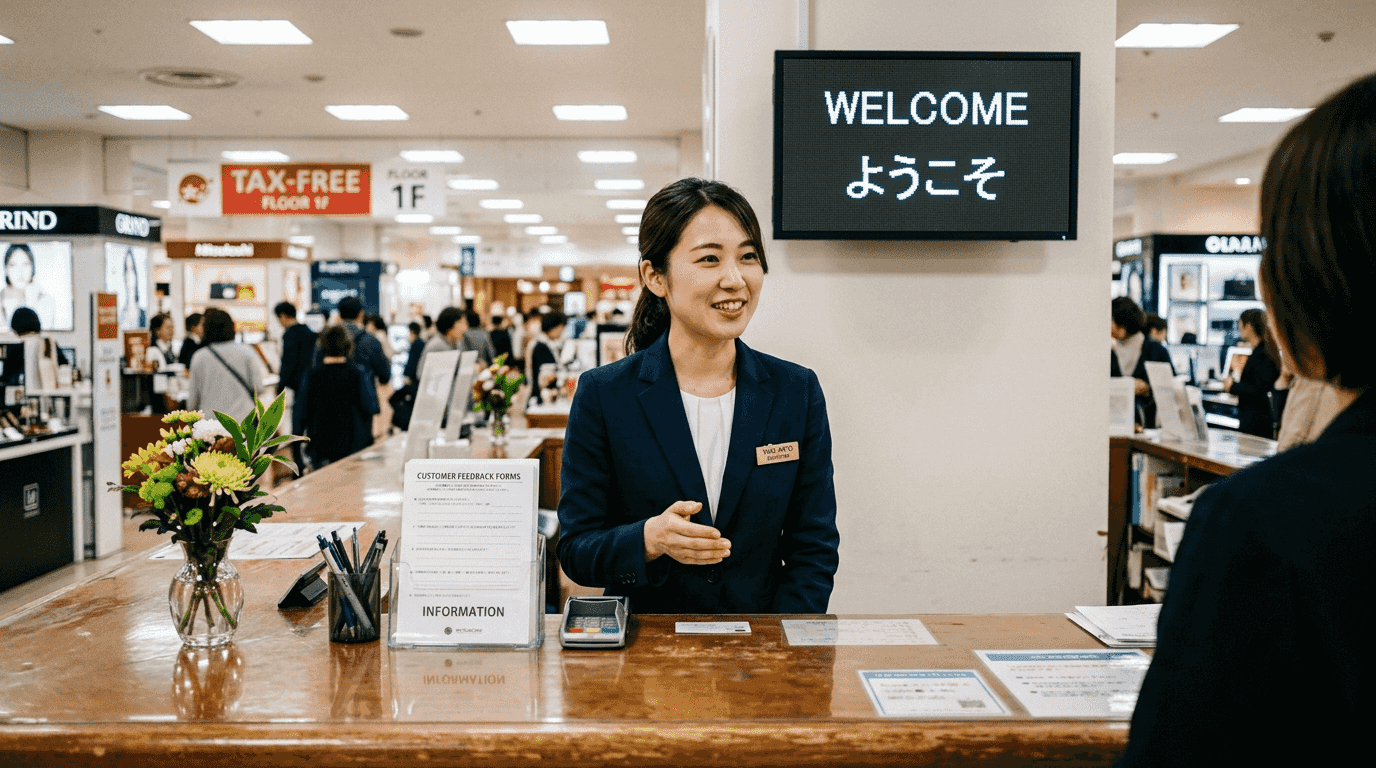
Customer service expectations exceed Western norms. Japanese consumers expect attentive, personalized support and flawless execution. A single quality issue or service failure can permanently damage brand reputation. Reviews spread rapidly through tight-knit consumer networks, making recovery from negative perceptions extremely difficult.
| Initial approach | Localized adaptation |
|---|---|
| Large Western-sized furniture | Compact designs for 60-70 sqm apartments |
| DIY assembly model | Professional assembly services included |
| Self-service retail format | Enhanced personalized customer support |
| Standard global catalog | Japan-specific product range |
Successful business strategy development for Japan requires deep market research. Survey target customers directly. Conduct focus groups to understand unspoken preferences. Japanese consumers rarely voice complaints openly, so proactive feedback collection reveals hidden dissatisfaction before it becomes public criticism.
Packaging, presentation, and aesthetic appeal matter enormously. Japanese consumers judge products by visual harmony and attention to detail. Sloppy packaging signals poor quality, regardless of the actual product inside. Invest in premium presentation that communicates respect for customers and pride in craftsmanship.
Key product adaptation strategies:
- Design for compact living spaces with multifunctional features
- Offer ready-to-use solutions rather than assembly-required products
- Provide exceptional after-sales support and warranty services
- Create Japan-specific product lines informed by local consumer research
- Ensure packaging and presentation meet high Japanese aesthetic standards
Pro Tip: Establish continuous feedback loops with Japanese customers through surveys, focus groups, and direct engagement. Use insights to refine products iteratively rather than launching once and assuming success. Learn from expert insights on culture to understand deeper consumer motivations.
Effective communication and trust-building strategies for Japan
Language capability separates successful market entrants from failures. Machine or AI translation often leads to failure because Japanese language complexity demands cultural context that automated tools miss. Honorifics, formality levels, and indirect phrasing carry meaning that literal translations destroy. A poorly translated email can insult senior executives or communicate unintended disrespect.
Hire bilingual staff who understand both Japanese business culture and Western communication styles. These professionals bridge not just language but cultural expectations. They recognize when Japanese partners express disagreement indirectly and translate Western directness into acceptable Japanese phrasing. Professional translators experienced in business contexts prevent costly miscommunication.
Nemawashi, the informal consensus-building process, requires patient groundwork before formal proposals. You discuss ideas privately with key stakeholders, gather feedback, and adjust plans before official meetings. This process feels inefficient to Western executives but it's essential for Japanese decision-making. Formal meetings serve to ratify decisions already reached through nemawashi, not debate new proposals.
Trust develops slowly through consistent, respectful engagement. Japanese partners evaluate reliability over months or years before committing to significant deals. Rushing this process signals unreliability and damages credibility. Demonstrate long-term commitment through regular visits, relationship maintenance, and follow-through on small commitments before requesting major agreements.
Steps to build trust in Japanese business relationships:
- Invest time in multiple face-to-face meetings focused on relationship-building before discussing business terms.
- Follow up consistently on commitments, no matter how small, to demonstrate reliability.
- Practice nemawashi by discussing proposals informally with stakeholders before formal presentations.
- Show respect for hierarchy by ensuring senior leaders receive appropriate deference and communication.
- Maintain long-term engagement rather than transactional interactions focused solely on immediate deals.
- Use tailored writing services for critical business communications to ensure cultural appropriateness.
Inadequate language capability and cultural misunderstanding cause more market entry failures than insufficient capital or poor products. Communication breakdowns destroy relationships that take years to rebuild, if recovery is even possible.
Learn from experiences shared on the AomoriJPInsider blog to understand real-world communication challenges and solutions. Japanese partners remember how you communicate more than what you say. Respectful, culturally aware engagement builds the foundation for lasting business success.
Pro Tip: Record and review your meetings with Japanese partners to identify communication patterns and improve your cultural fluency over time. Notice how Japanese colleagues phrase disagreements or concerns indirectly and adapt your listening skills accordingly.
Common pitfalls and how to avoid them when doing business in Japan
Many Western companies fail because they expect fast returns, neglect localized strategy, or misunderstand local business customs. These failures cost millions and damage reputations permanently. Recognizing common mistakes helps you avoid expensive missteps and build sustainable market presence.
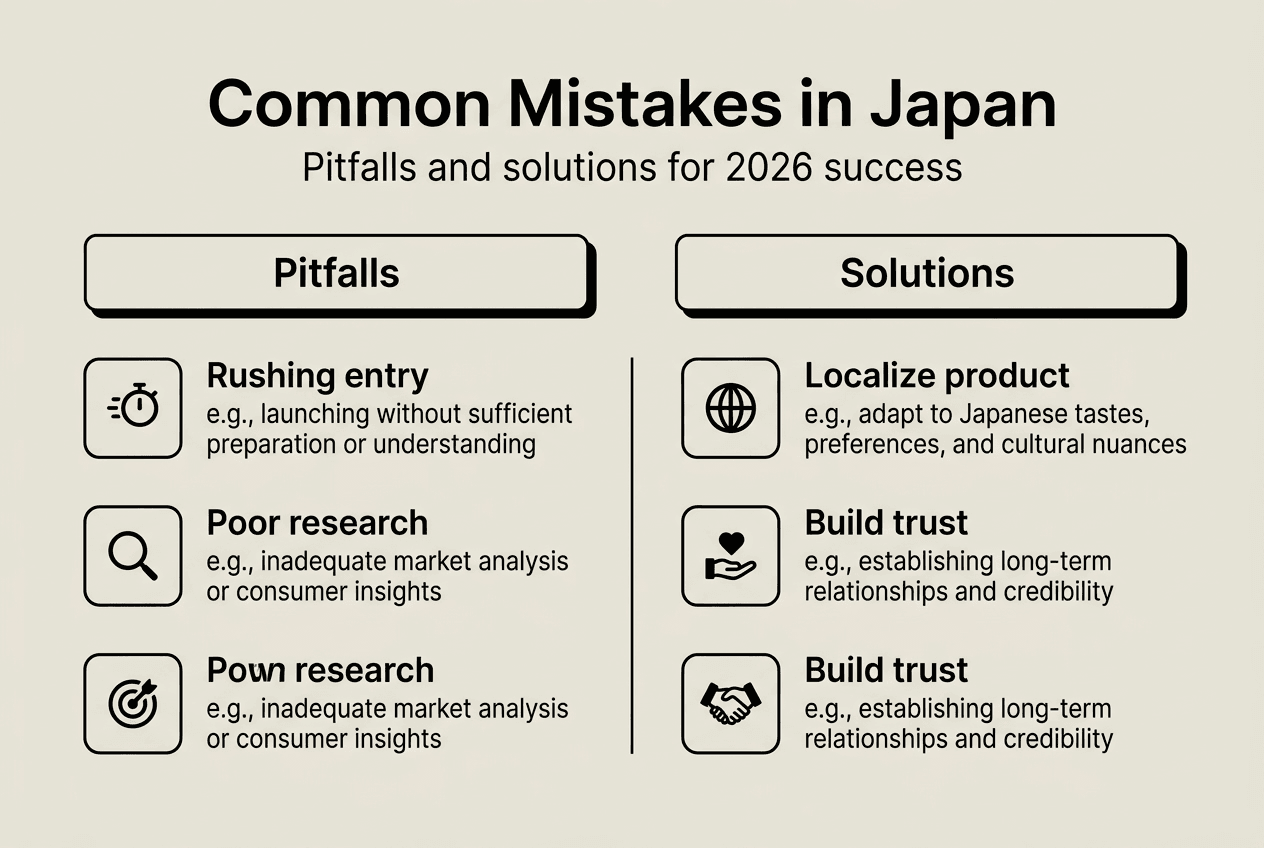
Rushing market entry tops the list of critical errors. Western executives accustomed to rapid scaling push for quick wins in Japan, alienating partners who value patience and relationship-building. Japanese business culture rewards long-term commitment over short-term gains. Companies that invest years in relationship development secure partnerships that competitors can't replicate.
Poor research and assumptions based on other Asian markets lead to strategic failures. Japan's consumer preferences, regulatory environment, and business practices differ significantly from China, Korea, or Southeast Asia. Treating Japan as just another Asian market guarantees misalignment with local expectations and needs.
| Ineffective approach | Effective approach |
|---|---|
| Rush market entry for quick returns | Invest time building relationships and trust |
| Apply generic Asian market strategies | Develop Japan-specific localization plans |
| Rely on machine translation for communications | Use professional bilingual staff and translators |
| Push Western business models unchanged | Adapt products and services to Japanese preferences |
| Prioritize individual decision-making speed | Respect consensus processes and hierarchy |
Language overconfidence creates communication disasters. Western executives who assume English suffices or trust machine translation alienate Japanese partners. Even when Japanese colleagues speak English, nuanced business discussions require native-level fluency that most professionals lack. Misunderstandings compound when both parties think they've communicated clearly but interpret conversations differently.
Neglecting trust-building rituals damages credibility. Gift-giving, business card exchange protocols, and after-work socializing aren't optional niceties. They're essential relationship maintenance that Japanese partners expect. Skipping these practices signals disrespect and disinterest in long-term partnership.
Common mistakes to avoid:
- Insufficient market research leading to misaligned product offerings and marketing messages
- Expecting rapid decision-making and becoming frustrated with consensus processes
- Ignoring hierarchy by communicating directly with junior staff instead of senior leaders
- Failing to localize products, packaging, and customer service for Japanese preferences
- Underestimating the importance of face-to-face meetings and relationship maintenance
- Relying on assumptions from other markets rather than Japan-specific insights
Pro Tip: Adopt a product-market fit mindset that prioritizes customer success and satisfaction before scaling operations. Japanese consumers become loyal brand advocates when companies demonstrate genuine commitment to meeting their needs. Develop comprehensive business strategy approaches that account for cultural nuances from day one.
Verify your assumptions constantly through customer feedback and partner input. What works in Western markets often fails in Japan, and only direct engagement reveals these gaps. Companies that treat Japan as a learning opportunity rather than a conquest build sustainable competitive advantages.
Partner with experts to succeed in the Japanese market
Navigating Japan's complex business environment becomes significantly easier with expert guidance. You gain insider knowledge that prevents costly mistakes and accelerates relationship-building. Specialized consulting provides tailored market entry strategies that align with your specific industry and goals. Cultural training workshops deepen your team's understanding of Japanese business etiquette, communication styles, and relationship protocols.
Professional support transforms theoretical knowledge into practical execution. Business strategy development services help you create Japan-specific plans that account for cultural nuances and market realities. Cultural training workshops prepare your team for successful engagement with Japanese partners and customers. Culturally aligned communications ensure your messaging resonates appropriately without unintended offense or confusion. Expert partners provide the cultural fluency and local insights that turn market entry challenges into competitive advantages.
FAQ
What common mistakes do Western businesses make in Japan?
Western businesses frequently ignore cultural norms, underestimate language barriers, and rush market entry expecting quick returns. They fail to localize products and services for Japanese preferences, apply generic strategies from other Asian markets, and neglect essential relationship-building practices. These errors damage credibility and waste resources on misaligned approaches.
How important is understanding Japanese business etiquette?
Business etiquette is foundational in Japan and directly influences relationship success, negotiation outcomes, and professional reputation. Understanding Japanese business etiquette including proper bowing, business card exchange, meeting protocols, and gift-giving demonstrates respect and cultural awareness. Violations of etiquette norms can permanently damage partnerships and close off opportunities.
What strategies can help overcome language barriers in Japan?
Employ bilingual staff or expert translators who understand Japanese business context rather than relying on machine translation. Practice culturally aware communication that accounts for indirect expression styles and hierarchical sensitivities. Invest in professional writing services for critical business documents to ensure accuracy and cultural appropriateness. Language capability builds trust and prevents costly miscommunication.
How can businesses adapt products for the Japanese market?
Focus on compact, space-efficient designs suitable for smaller Japanese living spaces averaging 60-70 square meters. Offer ready-to-use products rather than assembly-required items, and provide exceptional customer service that exceeds Western standards. Conduct direct consumer research to understand specific Japanese preferences and iterate products based on feedback. Premium packaging and attention to aesthetic details signal quality and respect for customers.